

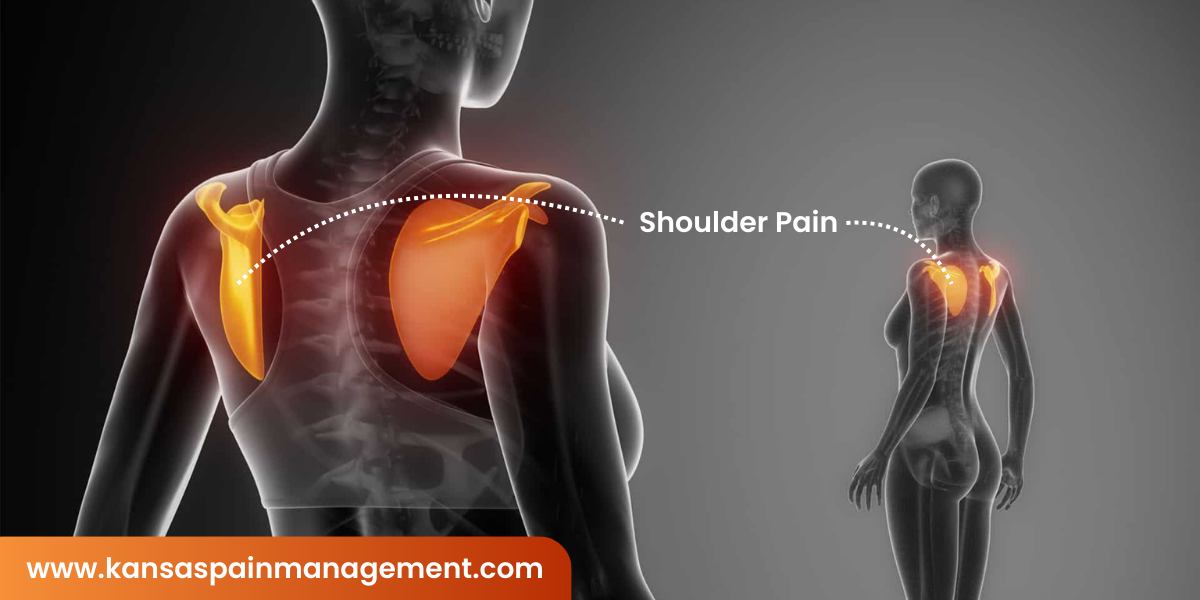
Shoulder pain refers to discomfort in or around the shoulder joint — an intricately structured area that supports a wide range of movement including lifting, reaching, and rotation. Because the shoulder has the greatest range of motion of any joint in the body, it is also prone to injury and overuse.
Shoulder pain can occur after an injury, from chronic conditions like arthritis, or due to muscle and tendon problems.
What Causes Shoulder Pain?
Shoulder pain can arise from a variety of sources. It may be due to problems within the shoulder joint itself or from structures surrounding it.
Common Causes
Rotator Cuff Disorders
The rotator cuff consists of muscles and tendons that stabilize the shoulder.
- Rotator cuff tendinopathy (tendon irritation)
- Rotator cuff tears
These often cause pain with lifting and reaching overhead.
Impingement Syndrome
When structures in the shoulder rub against each other abnormally, causing pain and inflammation.
Bursitis
Inflammation of the fluid‑filled sacs (bursae) that cushion shoulder tissues.
Arthritis
- Osteoarthritis (wear‑and‑tear)
- Inflammatory arthritis (autoimmune)
These cause aching, stiffness, and reduced motion.
Frozen Shoulder (Adhesive Capsulitis)
Stiffness and pain with limited movement.
Instability & Dislocation
Shoulder “slipping” out of place after injury or repetitive stress.
Fractures and Trauma
Falls or direct impacts can cause bone injury.
Referred Pain
Shoulder pain can sometimes originate from the neck or back (radiculopathy or other referred sources).
Symptoms of Shoulder Pain
Symptoms depend on the cause but commonly include:
- Aching or sharp pain in the shoulder
- Pain with movement or when lifting objects
- Stiffness or limited range of motion
- Weakness in the arm or shoulder
- Pain that radiates into upper arm or neck
- Clicking or grinding sensations
Symptoms may be acute (sudden onset after injury) or chronic (gradual and persistent).
Treatment Options